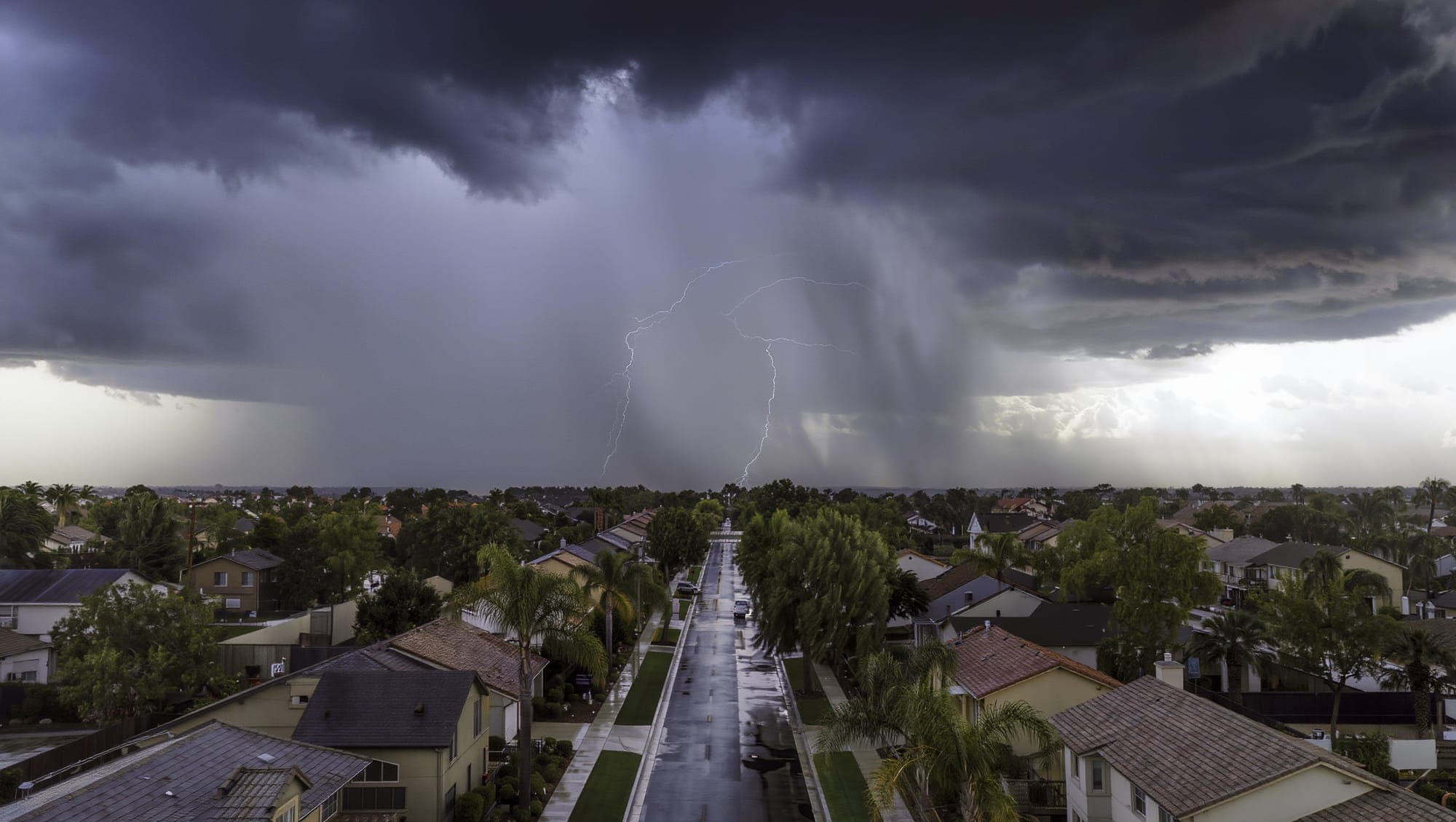
California homeowner reviewing roof insurance claim documents

STORM GUIDE · 10 MIN READ

Roofing insurance claim help — California homeowner's guide.

A roof insurance claim in California can either pay for the entire repair or leave you out of pocket because the adjuster under-scoped the loss. The difference is documentation, sequence, and whether you have a licensed roofer in the room when the adjuster shows up. Here's the playbook Cali #1 Roofing runs for every storm claim.

When to file a claim — and when not to

Quick answer

File when sudden damage exceeds your deductible by enough to be worth a claim record on your loss history (usually 2–3× the deductible). Do not file for slow leaks, wear-and-tear, or damage clearly older than 60 days — insurers will deny and the denial stays on your CLUE record for 7 years, raising future premiums.

California carriers track claim history through the CLUE (Comprehensive Loss Underwriting Exchange) database. A denied claim hurts your future rates almost as much as a paid one. Before filing: get a free inspection from a licensed roofer to confirm the damage is (a) recent, (b) attributable to a covered peril, and (c) above your deductible by enough to make the claim worth the record.

Step-by-step claim sequence

Day 0: damage occurs. Day 0–1: photograph everything, stop water intrusion, do not clean up. Day 1: call insurance carrier, get claim number. Day 1–2: call licensed roofer for free inspection. Day 2–7: adjuster scheduled — request your roofer be present. Day 7–14: adjuster issues initial scope and check (often deficient). Day 14–30: roofer files supplement for missing scope items. Day 30–60: supplemental check issued. Day 30–90: permanent repair executed. Day 60–120: final invoicing, depreciation recovery (RCV vs ACV).

RCV vs ACV — the most expensive misunderstanding

Quick answer

RCV (Replacement Cost Value) policies pay the full cost to replace your roof. ACV (Actual Cash Value) policies pay only the depreciated value — typically 40–70% less. Most California carriers default to RCV but pay the depreciated amount upfront and release the recoverable depreciation only after the repair is completed and invoiced.

If your policy is RCV, you'll get two checks: the first for ACV (depreciated value) issued immediately, and the second for the recoverable depreciation issued after the repair is complete and you submit final invoicing. Many homeowners cash the first check and never claim the second — leaving 30–50% of the policy benefit on the table. Cali #1 Roofing handles the final invoicing and depreciation recovery as part of the project closeout.

Common adjuster under-scoping mistakes

Adjusters work from limited time and software pricing tables (Xactimate). Common gaps we dispute: (1) shingle color matching — they pay for damaged slope only, but California building code and most HOAs require uniform appearance across the whole roof; (2) underlayment replacement — code-required when more than 25% of decking is exposed; (3) flashing replacement around chimneys, skylights, vents; (4) ridge cap replacement when only mid-slope shingles were itemized; (5) gutter replacement when sustained damage from impact debris.

QUESTIONS WE GET

About roofing insurance claim help.

Do I need a public adjuster?
Usually no — a licensed roofer attending the adjuster meeting and filing supplements handles 95% of what a public adjuster does, at no cost to you (the roofer is paid from the claim). Public adjusters take 10–15% of the settlement. Use one only for very large claims (>$50K) or when carrier disputes get adversarial.
What if my claim is denied?
Get a second independent inspection (we provide these). Common denial reasons that can be reversed: (a) damage attributed to wear-and-tear when storm-event documentation was insufficient, (b) damage outside policy period, (c) excluded peril. Most denials can be reversed with photo evidence, weather data linking damage to a specific storm date, and code citations.
How long do I have to file a claim?
California policies typically require notice within 1 year of the loss event, but practical filing is within 30–60 days. Beyond that, insurers argue damage is from a later, separate event. File fast, repair on the carrier's schedule.
Will filing a claim raise my premiums?
A single paid claim in California typically raises premiums 5–15% for 3 years. Two or more claims in 5 years can trigger non-renewal. This is why the pre-filing inspection matters — claims under your deductible aren't worth the rate impact.
Can I do the repair myself and pocket the insurance check?
Legally yes (for RCV policies, only if you complete the work and submit invoicing); practically no — the insurer pays only ACV upfront and releases the depreciation only after a licensed contractor invoices the work. DIY repair forfeits the recoverable depreciation and creates a permitted-work problem if you ever sell the home.

READY TO START

See your roof's cost in 90 seconds.

Satellite-measured estimate, transparent pricing, no salesperson at your door. CSLB #1130729.

CSLB #1130729 · 10-year workmanship warranty · BBB A Accredited 2025 · Insurance-direct billing

Call (866) 927-3792Instant estimate