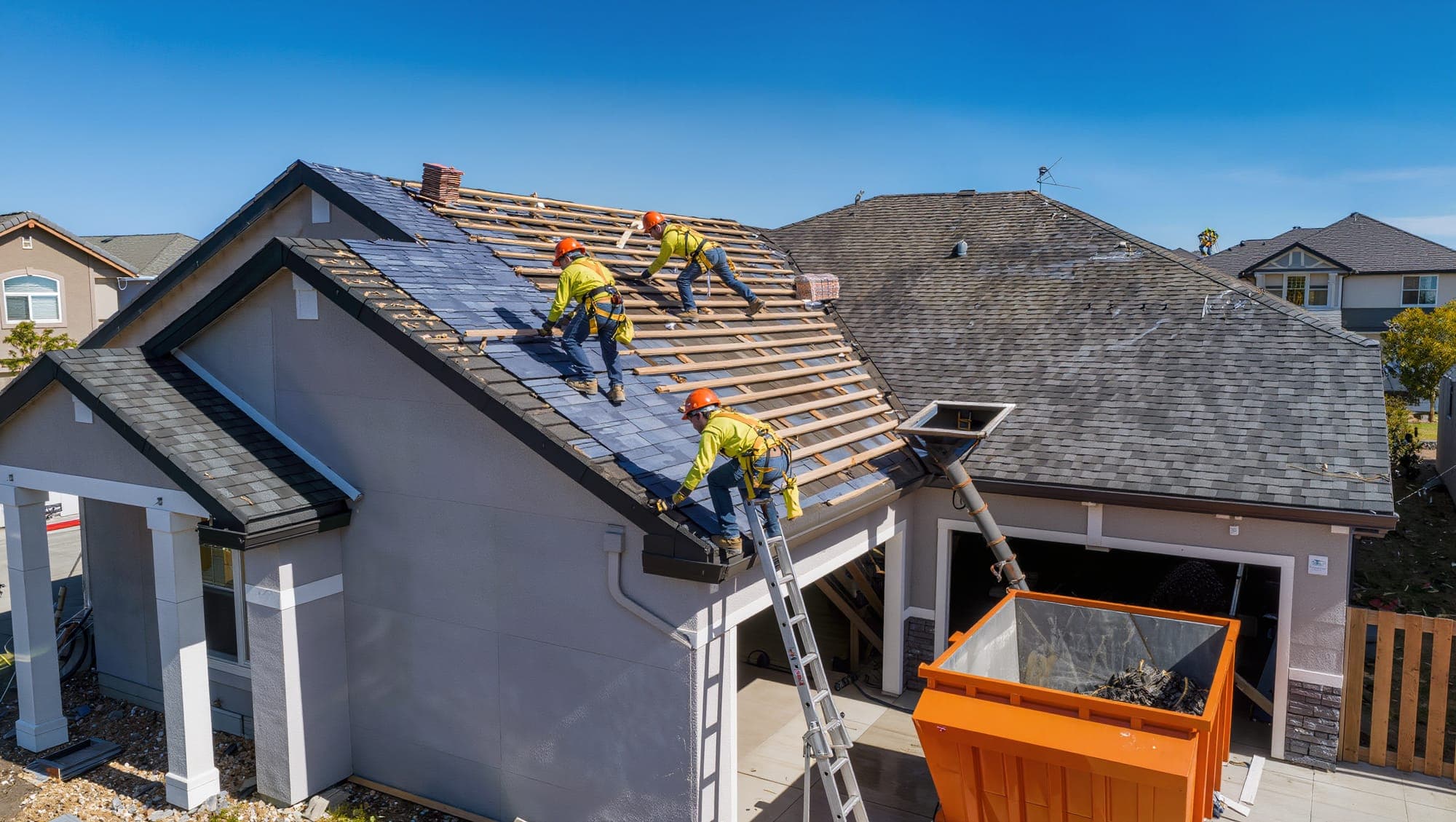
California foothill home with tile roof — wildfire-hardened Class A assembly

FIRE GUIDE · 11 MIN READ

Wildfire-resistant roofing in California.

California has more homes in wildfire-severity zones than any other state. The roof is one of the most ember-exposed surfaces on the building envelope — embers riding wind-driven plumes land on it, get into vents, lodge in gutters. A Class A roof system substantially reduces ignition risk on the roof surface itself. Here's what California homeowners actually need to know about wildfire-hardening the roof: the code, the materials, the insurance angle.

What 'Class A' actually means

Quick answer

Class A is the highest fire-resistance rating from ASTM E108 / UL 790 testing — the assembly resists flame spread, ember penetration, and combustion under standardized fire exposure. In California, all tile, most metal, and any Class A-rated asphalt shingle assembly qualifies. Class A is the roof system, not just the surface material.

Fire-resistance is rated A (best), B, or C (least). The rating applies to the complete roof assembly — surface material + underlayment + deck — not just the shingles or tile. A 'Class A shingle' on a non-fire-rated underlayment does NOT make a Class A roof. For California homes in CalFire-designated Fire Hazard Severity Zones, the building code requires a Class A-rated complete assembly, documented at permit. Cali #1 Roofing builds every wildfire-zone install to Class A spec by default.

Where wildfire-hardened roofing is required by code

Quick answer

California Residential Code §R337.5 (and CBC §705A for commercial) requires Class A roof assemblies in any Wildland-Urban Interface (WUI) area inside a CalFire Fire Hazard Severity Zone (moderate, high, or very high). As of January 1, 2026 these provisions are being consolidated under the 2025 California Wildland-Urban Interface Code (CWUIC, Title 24 Part 7). Most foothill, canyon, and ridge neighborhoods across LA County, Orange County, and the East Bay fall under these zones. Check your address on the CalFire FHSZ map before re-roofing.

California Residential Code §R337.5 (CWUIC Title 24 Part 7 effective January 1, 2026) applies to any new construction or full re-roof in a CalFire-designated severity zone — moderate, high, or very high. Cali #1 Roofing pulls a CalFire-zone-specific permit on every project where the address falls in an FHSZ; we document the assembly to spec for the building inspector + the homeowner's insurance carrier.

Material choices for Class A assemblies

Tile (clay or concrete) is naturally Class A and is the gold standard in California wildfire zones — long lifespan, no flame propagation, no ember penetration through the surface. Standing-seam metal is Class A and adds the benefit of no ember-catch geometry (smooth slopes shed embers fast). Architectural asphalt shingles can be Class A-certified when paired with the right underlayment + Class A-tested deck assembly (major brands offer Class A SKUs — confirm the specific product listing before specifying). Cedar shake is not permitted in any Fire Hazard Severity Zone in California, regardless of fire-retardant treatment — see the dedicated cedar-shake question below.

Beyond the roof surface — the components that actually fail

Quick answer

Embers don't usually ignite the roof surface itself; they ignite the vulnerable components AROUND it — attic vents (no mesh or coarse mesh), gutters full of debris, exposed eave soffits, roof-wall transitions, and skylight flashings. Ember-resistant vents (CRC §R337.6: noncombustible mesh, 1/16" minimum to 1/8" maximum opening), sealed flashings, and clean gutters do more for wildfire survivability than the roof material choice alone.

Post-fire investigations by IBHS and NIST (Tubbs Fire 2017, Camp Fire 2018) consistently document the same failure pattern: the roof material itself often didn't burn, but embers entered the attic through standard vents and ignited insulation or stored material. Or they collected in clogged gutters and burned the fascia. Or they lodged in unsealed roof-wall transitions and burned the framing. California's wildfire-zone code (CRC §R337.6) now requires noncombustible mesh between 1/16" minimum and 1/8" maximum on all attic and roof vents, plus sealed roof-wall transitions and noncombustible gutter materials. We retrofit existing roofs to these specs as part of any wildfire-zone re-roof, or as standalone hardening projects when a roof replacement isn't yet needed.

Insurance carrier requirements + discount programs

California's homeowners insurance market has compressed dramatically since 2017 — multiple major carriers have paused or restricted new homeowners-policy writing in the state (State Farm announced a statewide pause on new homeowners policies on May 26, 2023, citing wildfire risk and rising rebuild costs), leaving the California FAIR Plan as the last-resort coverage option for many homeowners. The California Department of Insurance's Safer From Wildfires regulation (CCR §2644.9, effective 2022-2023) requires admitted carriers to recognize a set of wildfire-mitigation factors — including Class A roof and ember-resistant vents — in their rating plans, but the discount each carrier provides varies (and current carrier-specific discount terms should be confirmed with the carrier before quoting an amount). Cali #1 Roofing provides a wildfire-hardening compliance packet (photos + materials list + Class A certificates) at project closeout for homeowners to submit to their carrier.

The Cali #1 Roofing wildfire-zone process

We start with a free CalFire severity-zone lookup using your address — that determines whether the CRC §R337 / CWUIC requirements apply and which tier (moderate, high, very high) drives the specification. For any wildfire-zone project we automatically include: Class A complete assembly, code-compliant ember-resistant vents (1/16"-1/8" noncombustible mesh per CRC §R337.6), sealed roof-wall transitions, noncombustible gutter / fascia upgrades where existing components don't meet code, and a final compliance packet for the insurance carrier. Wildfire-hardening upcharge over a standard re-roof varies by home size and how many components need retrofit.

QUESTIONS WE GET

About wildfire-resistant roofing.

Is my home in a wildfire severity zone?
Check the CalFire Fire Hazard Severity Zone (FHSZ) map at osfm.fire.ca.gov or call your local building department. If your home is in a moderate, high, or very high severity zone, CRC §R337 (now consolidated under the 2025 CWUIC) applies on any re-roof. Cali #1 Roofing runs this lookup as part of every free estimate for California homes outside the major coastal corridors.
Does a Class A roof actually prevent wildfire damage?
It substantially reduces it. Post-fire studies by IBHS and NIST after the 2017 Tubbs Fire and 2018 Camp Fire identified the building envelope (including roof assembly and vent components) as a key determinant of structure survival in WUI exposures. The roof material alone isn't enough — the component-level details (vents, gutters, flashings) matter equally. We install both.
How much does wildfire-hardening cost vs a regular re-roof?
Wildfire-hardening typically adds a modest amount to a standard re-roof — Class A-certified shingles run a few hundred dollars more on a 2,500 sqft roof, ember-resistant vents are roughly $40-$80 per vent, and sealed roof-wall transitions add a few hundred dollars in labor. Tile roofs are Class A by default with no Class-A-related upcharge. Final pricing is confirmed in your written quote.
Do I get an insurance discount for a wildfire-hardened roof?
California carriers admitted to the state are required by CCR §2644.9 (the Department of Insurance's Safer From Wildfires regulation) to recognize wildfire-mitigation factors — including Class A roof and ember-resistant vents — in their rating plans. The actual discount each carrier provides varies and should be confirmed directly with your carrier. Cali #1 Roofing provides a compliance packet at project closeout that homeowners submit to their carrier.
What about cedar shake or wood shingle roofs in wildfire zones?
Wood shakes and wood shingles are not permitted in any Fire Hazard Severity Zone (moderate, high, or very high) in California, regardless of fire-retardant treatment. Most insurance carriers will not write a policy on existing cedar shake in wildfire areas. Cali #1 Roofing recommends replacement with a Class A material in any wildfire-zone home that still has cedar.
READY TO START

See your roof's cost in 90 seconds.

Satellite-measured estimate, transparent pricing, no salesperson at your door. CSLB #1130729.

CSLB #1130729 · 10-year workmanship warranty · BBB A Accredited 2025 · Insurance-direct billing

Call (866) 927-3792Instant estimate