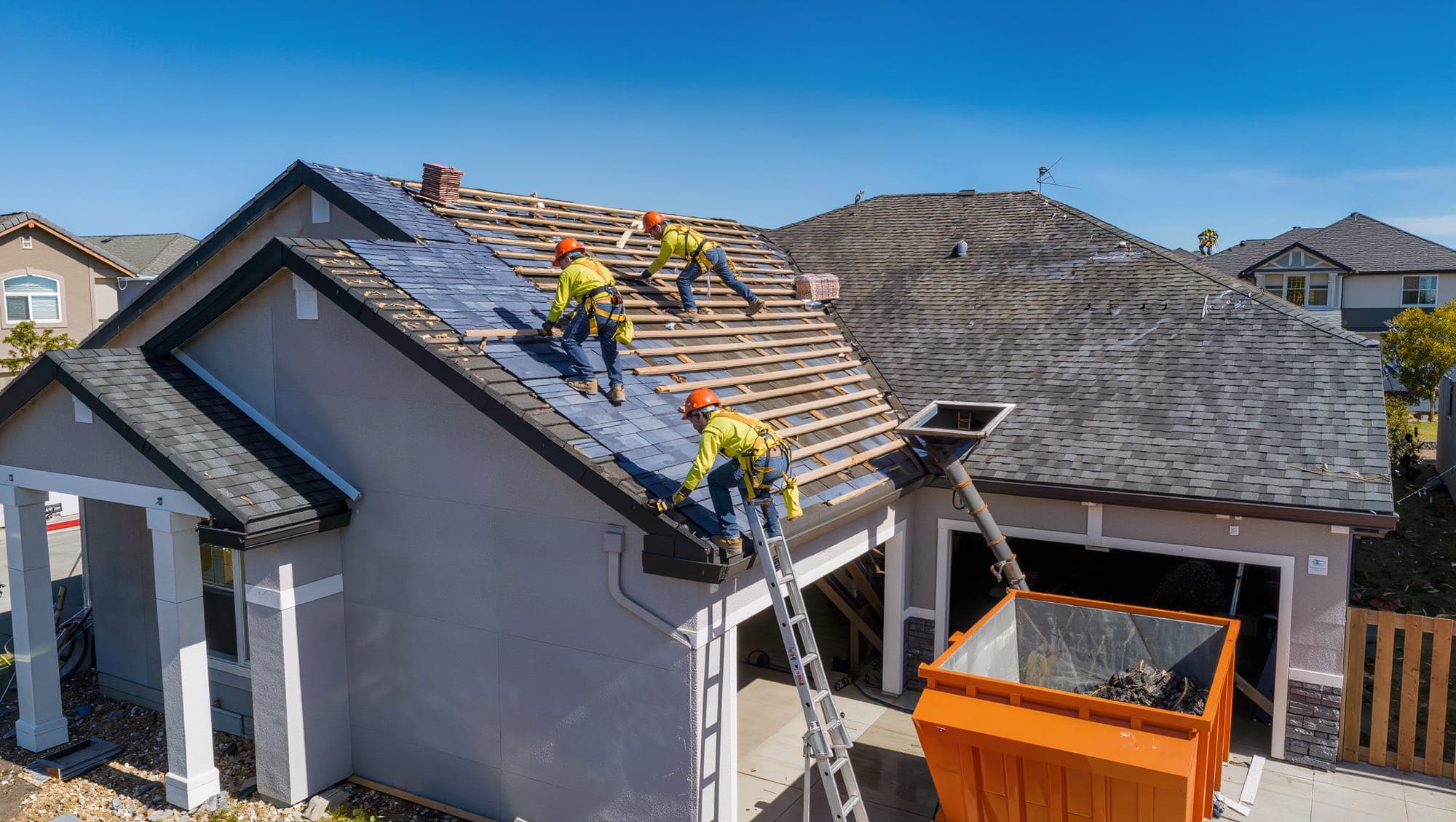
California roof close-up — ember-resistant ridge vent and sealed roof-wall transition

FIRE GUIDE · 10 MIN READ

Ember-resistant vents & flashing for California roofs.

Post-fire investigations have repeated the same finding for years: the roof material is often not the first ignition point. Embers blow into the home through attic vents, lodge in clogged gutters, or slip into unsealed flashings. The under-discussed details — vent mesh size, flashing seal, gutter material — are major determinants of wildfire survivability. Here's the spec sheet that actually matters in California.

Why ember-resistant mesh on vents matters

Quick answer

Embers riding wildfire smoke plumes can be very small. California Residential Code §R337.6 requires attic and roof vents to be covered with corrosion-resistant noncombustible wire mesh between 1/16" minimum and 1/8" maximum opening, or to use a vent listed by the Office of the State Fire Marshal under ASTM E2886 ember-resistance testing.

Standard residential attic vents have historically shipped with 1/4" galvanized mesh — sized to keep out birds and rodents, not embers. IBHS and NIST post-fire investigations (Tubbs Fire 2017, Camp Fire 2018) identified standard mesh attic vents as a major ember-entry pathway in destroyed homes. California's WUI code (CRC §R337.6) now requires either (a) noncombustible mesh between 1/16" and 1/8" or (b) a vent listed by the OSFM under ASTM E2886. Cali #1 Roofing replaces vents on every wildfire-zone re-roof, and offers vent retrofit as a standalone hardening project for homes not yet ready for a full re-roof.

Ridge vents — the trickiest spec

Ridge vents (the continuous vent strip along the peak of a roof) are particularly important because they're often the largest single vent opening on a home — and historically among the most ember-vulnerable. Older ridge vents used coarser mesh or external baffles. Modern wildfire-rated ridge vents (Air Vent, GAF Cobra, Owens Corning VentSure, and other OSFM-listed products) use 1/16"-1/8" mesh per CRC §R337.6 with internal baffles that block embers while maintaining the airflow required for attic ventilation. Confirm the specific product is on the current OSFM WUI Listed Products Handbook before installation.

Roof-wall transitions — the silent ember trap

Quick answer

The seam where the roof meets a wall (around dormers, second-story additions, chimneys) is a common ember-lodging point. CRC §R337 requires roof-wall transitions to be sealed or otherwise designed to resist ember intrusion. Sealing methods include fire-resistant caulk, metal closure strips, and sealed Z-flashing.

Roof-wall transitions are an often-overlooked component in wildfire hardening. Standard residential framing leaves a gap between the wall cladding (siding, stucco) and the roof deck for moisture management. IBHS and post-fire investigations have documented homes where Class A roofs survived intact but the structure ignited through unsealed roof-wall transitions on dormers or second-story walls. Cali #1 Roofing seals every transition with fire-rated caulk plus metal closure strips on wildfire-zone projects. We document the seal with photos for the homeowner's compliance packet.

Flashing materials — what counts as Class A

Flashing covers the joints where the roof penetrates walls, vents, chimneys, and skylights. For Class A assemblies, flashing must be noncombustible (typically galvanized steel, aluminum, or copper) and properly sealed at every transition. Cali #1 Roofing uses galvanized step flashing on roof-wall transitions, copper or aluminum at chimneys and skylights, and a Class A-rated underlayment at every valley. We don't use plastic or PVC flashing on California wildfire-zone projects, even where code might technically allow it.

Gutters — a frequently-overlooked ignition source

Quick answer

Clogged gutters full of pine needles, leaves, and dust are a common ember-ignition source on California homes. Embers land in the dry debris, smolder, then ignite. Noncombustible gutters (aluminum, steel, copper) paired with noncombustible gutter guards substantially reduce this exposure.

Plastic / vinyl gutters can melt; wood gutter boards burn directly. Even aluminum gutters can transfer heat to the home through debris-fueled smoldering. We replace gutters as part of every wildfire-zone re-roof in California: noncombustible material plus noncombustible gutter guards (Leaf Filter, Gutter Helmet, MasterShield, or equivalent). The investment is modest relative to the wildfire-resistance lift; insurers participating in CCR §2644.9 (Safer From Wildfires) discount programs may recognize this mitigation.

How Cali #1 Roofing documents all of this

Every Cali #1 wildfire-zone closeout includes photos of: (1) attic vent mesh (showing CRC §R337.6 compliance), (2) ridge vent baffle, (3) roof-wall transitions with seal and closure strips visible, (4) all flashing locations with material visible, (5) gutter assembly + guards, (6) the building permit reflecting CRC §R337 / CWUIC compliance. This goes into a single PDF compliance packet the homeowner submits to their insurance carrier.

QUESTIONS WE GET

About ember-resistant vents & flashing for california roofs.

Can I just retrofit ember-resistant vents on my existing roof?
Yes — vent retrofits are one of the cheaper wildfire-hardening upgrades available. We can swap typical attic vents on most California homes in a few hours; permit requirements are jurisdiction-dependent. If you're not ready for a full re-roof but live in a CalFire Fire Hazard Severity Zone, this is a high-leverage step.
What about gable vents — do they need code-compliant mesh too?
Yes. CRC §R337.6 applies to all attic ventilation openings in a CalFire FHSZ, including gable-end vents, soffit vents, and ridge vents. Cali #1 Roofing audits every opening on the home as part of wildfire-zone projects.
Are wildfire-rated vents worse for ventilation?
Slightly different airflow characteristics, but OSFM-listed wildfire-rated vents are designed to maintain code-required attic ventilation (typically a 1:150 ratio of vent area to attic floor area). We size vent count to compensate for the finer mesh's airflow impact.
What's the difference between mesh size and 'ember-resistant'?
Mesh size (1/16"-1/8" per CRC §R337.6) is one part of the requirement; 'ember-resistant' as defined by IBHS and the WUI code is a broader category that also accounts for baffle design and overall assembly behavior. Vents listed by the OSFM under ASTM E2886 meet the ember-resistance test directly.
Do gutter guards actually help in a wildfire?
When paired with noncombustible gutter material, gutter guards reduce the debris accumulation that fuels ember-ignition. The combination is what counts — noncombustible gutter + noncombustible guard. Cali #1 Roofing installs both as part of wildfire-zone projects.

READY TO START

See your roof's cost in 90 seconds.

Satellite-measured estimate, transparent pricing, no salesperson at your door. CSLB #1130729.

CSLB #1130729 · 10-year workmanship warranty · BBB A Accredited 2025 · Insurance-direct billing

Call (866) 927-3792Instant estimate